Bridging the Healthcare Gap Through Rural Medical Education
Access to quality healthcare is a fundamental right, yet for millions in rural India, it remains out of reach, not due to the lack of hospitals alone, but due to a severe shortage of trained healthcare professionals.
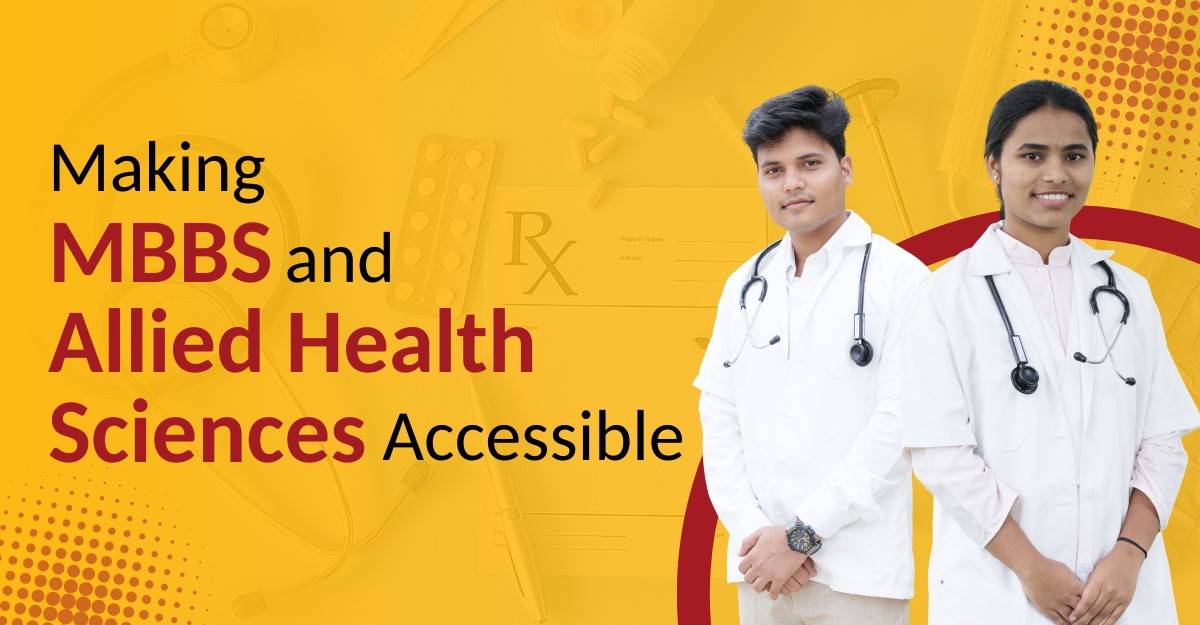
At the Each One Educate One Foundation, we believe that transforming healthcare outcomes begins with making medical education accessible and affordable for those who need it most. By opening pathways to MBBS for rural India, we enable aspiring doctors from underserved communities to return and serve where care is most scarce.
At the same time, our focus on strengthening nursing education and building robust pathways in allied health sciences ensures a well-rounded, compassionate healthcare workforce, one that is inclusive, service-driven, and deeply rooted in the needs of rural India.
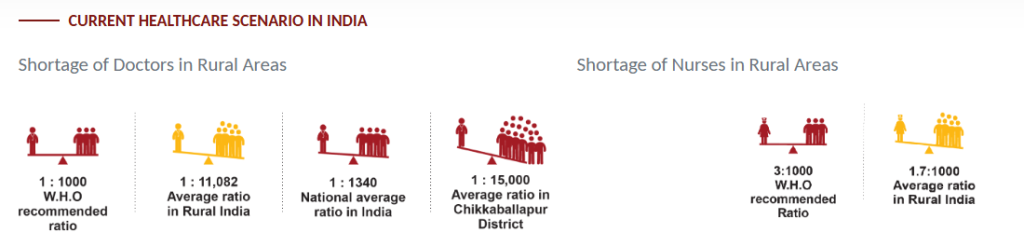
The Current Healthcare Scenario in India
At the same time, our focus on strengthening nursing education and building robust pathways in allied health sciences ensures a well-rounded, compassionate healthcare workforce, one that is inclusive, service-driven, and deeply rooted in the needs of rural India.
- Improve accessibility: This is one of the core objectives of education NGOs. These NGOs work towards ensuring education is accessible to marginalised communities as well as in rural, remote hinterlands. They also work towards increasing enrolment, attendance, and retention rates of children from these communities.
- Ensure quality: Some education NGOs focus on improving the quality and standard of teaching-learning methods by upgrading the infrastructure and integrating innovative and new-age tools and techniques like smartboards, labs, libraries, educational toys, digital literacy, and the like. They also work towards improving the teacher-student ratio in schools to address unavailability of teachers and overcrowded classrooms.
- Address hindrances: Poverty, gender discrimination, caste system, unavailability of schools in close proximity, lack of transport facility, and social evils like child labour and early marriage obstruct children from receiving education. The NGOs strive to address these issues at various levels with the objective to ensure every child receives their share of rightful education and with your generous choice to donate for education, these NGOs can certainly make forward strides in their efforts.
- Engage and spread awareness: On a regular basis, NGOs conduct awareness programmes to engage with local communities, parents, and other related stakeholders and educate them on the importance of education. They also inform the communities about the various schemes the government has rolled out to support education and skill development of children from primary grades to higher education level.
- Research and advocacy: Since the education NGOs work at ground zero, they are better aware and informed of the real issues hindering the achievement of “education for all”. This gives them the edge to conduct thorough analysis of the challenges and requirements, thereby enabling them to ask for need-based support, innovate practical solutions, as well as advocate for policy changes and reforms in the education system.
Bridging the education gap sustainably
India continues to struggle with an uneven distribution of healthcare professionals and stronger rural medical education systems. Although the number of health facilities in rural areas has increased over the past decade, convincing doctors to serve in these regions remains a challenge. As reported by journalist Dhinesh C Sharma, “Although the number of health facilities in rural areas of India has increased during the past decade, convincing doctors to work in them remains a challenge.”
This imbalance has led to:
- A shortage of doctors in rural areas
- A critical shortage of trained nurses
- Limited availability of allied health professionals, such as lab technicians, radiographers, and physiotherapists
Rural communities, which form nearly 70% of India’s population, continue to bear the brunt of this gap in healthcare delivery.
Why Medical Education Remains Out of Reach
One of the most pressing challenges in advancing MBBS for rural India is the unaffordable cost of medical education. Becoming a doctor often requires:
- 7.5 years of MBBS education, followed by 2–3 additional years for specialisation
- Highly competitive entrance exams with limited seats
- Heavy dependence on education loans
- Long-term financial pressure on families
As Dr Ranjith Ravella aptly observes,
“A middle-class family usually has to mortgage their home in order to make sure that their child is able to continue achieving his dream. This makes earning money one of the major priorities of a student passing out from private medical colleges.”
This financial burden often pushes graduates toward lucrative urban careers, leaving rural healthcare underserved. Former Health Secretary Sujatha Rao also warned of inconsistent quality, stating, “The market has been flooded with doctors so poorly trained they are little better than quacks.”
Medical education, instead of being a pathway to service, has become inequitable and inaccessible for students from poor and rural backgrounds.
A Transformative Solution: Free Medical Education for Rural India
Addressing this systemic challenge requires bold, structural intervention.
On 25th March 2023, India witnessed a historic milestone with the inauguration of Sri Madhusudan Sai Institute for Medical Sciences & Research (SMSIMSR), India’s first free-of-charge rural medical college, by the Honourable Prime Minister of India, Shri Narendra Modi ji.
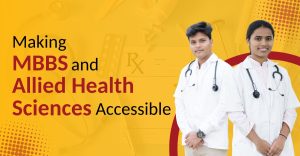
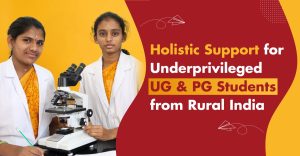
This pioneering institution represents a paradigm shift in rural medical education, making MBBS, Nursing, and Allied health sciences accessible to meritorious students from economically weaker rural backgrounds.
The impact is twofold:
- Empowering aspiring meritorious students who cannot afford medical education
- Strengthening rural healthcare systems with trained, compassionate professionals
The Each One Medical Educate One Programme
At the core of this initiative is the Each One Medical Educate One Programme, a comprehensive healthcare education scholarship programme designed to produce professionals guided by compassion, competence, and conscience.
Programme Philosophy
- Heart over the head
- Society over self
- Nation-building over personal gain
- Paying it forward to future generations
Key Features
- Full scholarship for medical and paramedical education, based on merit
- Courses offered:
- Full scholarship for medical and paramedical education, based on merit
- Courses offered:
- MBBS
- DNB
- Full scholarship for medical and paramedical education, based on merit
- Nursing Education
- Allied Health Sciences
- Allied Health Sciences
- Seamless progression for students from E1E1-supported higher secondary schools based on NEET performance
- Opportunity for other NEET-qualified rural
- Complete coverage of:
- Tuition and teaching materials
- Food and accommodation
- Clothing and essential needs
Investment Required
- MBBS: ₹8,00,000 per student per annum
- Nursing & Allied Health Sciences: ₹2,00,000 per student per annum
Story of Hope: Rifa M – Aspiring Healer, Inspired Learner
I come from a humble family in Chennarayapatna, Hassan district, where my parents work as high school teachers. When I first joined this medical college, we were unsure if it was the right decision. But very soon, I realised I had found the perfect place to grow.
Beyond academic excellence, I experienced true care and respect. During Ramzan, the wardens ensured I received my meals before sunrise so I could observe my fast with dignity. Here, I discovered that the teachings of the Bhagavad Gita and the Holy Quran share the same essence—only the words differ.
With the guidance of dedicated mentors and the blessings of our revered founder, Sri Madhusudan Sai, I scored 88% in my first-year MBBS exams. Free-of-charge medical education has lifted a heavy burden from families like mine, inspiring me to serve society with compassion and selflessness.
Building a Healthier Rural India
By making MBBS for rural India, nursing education, and allied health sciences accessible, the Each One Educate One Foundation is addressing the healthcare crisis at its root. This path-breaking initiative is not just about producing doctors; it is about building a resilient, equitable healthcare system where rural communities are cared for by professionals who understand their realities.
When education is driven by service, healthcare becomes a mission, not a market.
Together, we can heal a nation by educating its healers.